Saturday, April 30, 2016
No Income Tax=Faster Growth
In their 2015 book, “The Wealth of States,” Arthur Laffer, Rex Sinquefield and Travis Brown examined the 11 states that have adopted income taxes since 1960. All 11 grew more slowly than the national average and all of them had slower job growth. Meanwhile, since 1990 the nine no-income-tax states have had twice the population growth and job creation as measured by payrolls, and about one-third faster total income growth than the high-tax states like New York, California and New Jersey. A no-income-tax policy is a flashing billboard telling employers: We’re open for business.

Wednesday, April 27, 2016
Tuesday, April 26, 2016
3 Questions for the Settled Science Crowd
According to Progressives, Global Warming is "settled science". Beyond the obvious point that it is settled only among those who wish it so, I do have three serious questions:
1. Most of the climate models advanced a couple of decades ago predicted warming that has not since come to pass. How certain are you that the other predictions of these models are now accurate?
2. Why is it you think that we have the technology resources to counteract the enormous forces that have driven the climate to constantly change over millions of years?
3. What evidence can you offer that the cost of fighting a changing climate is less than the cost of adapting to a changing climate? Maybe instead of trying to protect existing vineyards in the Napa Valley it might be cheaper to plant vines in Greenland (like they did during the last warming period)?
1. Most of the climate models advanced a couple of decades ago predicted warming that has not since come to pass. How certain are you that the other predictions of these models are now accurate?
2. Why is it you think that we have the technology resources to counteract the enormous forces that have driven the climate to constantly change over millions of years?
3. What evidence can you offer that the cost of fighting a changing climate is less than the cost of adapting to a changing climate? Maybe instead of trying to protect existing vineyards in the Napa Valley it might be cheaper to plant vines in Greenland (like they did during the last warming period)?
Monday, April 25, 2016
Obamacare's Effect on Worker Hours
Monday, April 18, 2016
Yes, The Middle Class is Shrinking . . .
Tuesday, April 12, 2016
The Rational Economic Reason for Income Inequality
Ever notice the price of gasoline or beef or television sets rises when demand increases and/or there is a shortage of supply? Ever notice that prices fall when there is a glut of supply or demand decreases? Of course you have. That's just the way economics works, right?
But when it comes to labor prices, somehow this relationship is not supposed to hold. Over the last thirty years (at least), the demand for high-skill labor -- the sort that requires advanced training and often a college degree -- has been increasing rapidly. The supply of that skilled labor has not increased nearly as fast. At the same time the demand for unskilled labor has been falling as more and more routine functions are done by machines rather than people. Meanwhile the supply of unskilled labor has been steady to increasing (especially due to immigration). What would you think the consequence of this to be? That's right, wages paid to higher skilled labor would grow faster than those paid to lower skilled labor.
This obvious and efficient* phenomena goes by another name in the political realm: Income Inequality. There is only one way to change the underlying fundamentals (assuming you want to): increase the supply of skilled labor and reduce the supply of unskilled labor. The former can only be accomplished by getting more people into post-high school programs (not necessarily a 4 year college) that equip them with higher value skills. The most likely way to accomplish the latter is to restrict immigration of low-skilled people. This would require the US to adopt an immigration policy that prioritized economic viability over family ties. Sorry, but that means that someone from China you don't know will get a visa rather than your illiterate brother Fernando.
* Income inequality serves the same economic purpose that any price does. The greater the income gap between skilled an unskilled, the more incentive there is to acquire skills. When there were plenty of semi-skilled jobs that paid you $50,000/year, the incentives were low. When those same skills will only pay you $35,000, the incentives are higher.
Wednesday, April 6, 2016
California Dreaming
What do you think the odds are that the recently adopted minimum wage (which will, in real terms, be about 30% higher than ever before) will have an impact on businesses and hiring in California. You would think there are some things so obvious even a California legislator could see them.
Thursday, March 31, 2016
Wage Insanity in California
The State of California has proposed a minimum wage law of $15/hour for the state. Let's just see how that might impact a couple of locales.
Current Median Wage
San Jose $27.61
Fresno $15.02
In San Jose, maybe 15% of the workforce is currently earning less than $15, but in Fresno, nearly half the workforce is earning less than $15. What do you think the impact on employment in Fresno will be when employers are forced to pay more to half its current workforce? A freshman Econ 101 student could figure this out. Apparently not the elected officials in Sacramento.
Current Median Wage
San Jose $27.61
Fresno $15.02
In San Jose, maybe 15% of the workforce is currently earning less than $15, but in Fresno, nearly half the workforce is earning less than $15. What do you think the impact on employment in Fresno will be when employers are forced to pay more to half its current workforce? A freshman Econ 101 student could figure this out. Apparently not the elected officials in Sacramento.
Wednesday, March 30, 2016
CEO Salaries and Orthodontists
Today the Bureau of Labor Statistics released it's newest OCCUPATIONAL EMPLOYMENT AND WAGES summary. The average Chief Executive Officer (about whose earnings Democrats are very agitated) earned $185,850 -- or 16% less than the average orthodontist (about whom Democrats seem much less agitated). As usual, facts seldom get in the way of a good demagogue.
CEO $185,800
Orthodontist $221,390
Petroleum Engineer $149,990
Lawyer $136,260
Dentist $177,230
Nurse Anesthetist $160,250
Anesthesiologist $258,100
Airline pilot $136,400
CEO $185,800
Orthodontist $221,390
Petroleum Engineer $149,990
Lawyer $136,260
Dentist $177,230
Nurse Anesthetist $160,250
Anesthesiologist $258,100
Airline pilot $136,400
Monday, March 28, 2016
Poverty and Marriage
Thursday, March 24, 2016
The Gender Gap in Awarded Degrees
Thursday, March 17, 2016
Manufacturing Jobs Have Nothing To Do With China
Donald Trump (and others) have been complaining that China has "stolen" all the manufacturing jobs from the United States. According to Trump, that's because we make "bad deals".
But the reality is that manufacturing output in the United States is at an all time high. We have never manufactured as many goods as we do today. What's not at an all time high is employment in manufacturing. Below is a chart showing the percentage of US employment in manufacturing.

This trend line is not a result of making "bad deals" with China. The downward trend is 50 years old. It predates the end of Bretton Woods. It predates the union-crushing, deregulating era of the late 1970s and early 1980s. It predates the era of Japanese dominance, the rise of the Asian tigers, and the recent surge in Chinese growth. What is driving this trend is technology. Manufacturers steadily improve manufacturing productivity, automating tasks that used to be done with labor.
This is not going to change no matter how many Yuge Deals you do. Trump is just another in a long line of demagogues who prey on the emotions of the economically ignorant.
But the reality is that manufacturing output in the United States is at an all time high. We have never manufactured as many goods as we do today. What's not at an all time high is employment in manufacturing. Below is a chart showing the percentage of US employment in manufacturing.
This trend line is not a result of making "bad deals" with China. The downward trend is 50 years old. It predates the end of Bretton Woods. It predates the union-crushing, deregulating era of the late 1970s and early 1980s. It predates the era of Japanese dominance, the rise of the Asian tigers, and the recent surge in Chinese growth. What is driving this trend is technology. Manufacturers steadily improve manufacturing productivity, automating tasks that used to be done with labor.
This is not going to change no matter how many Yuge Deals you do. Trump is just another in a long line of demagogues who prey on the emotions of the economically ignorant.
Wednesday, March 9, 2016
Baseball's Elite to Average Salaries Tops CEOs
Tuesday, March 8, 2016
Friday, March 4, 2016
Minimum Wage Explained in One Panel
At the same time this illustrates how people misuse the word “worth”. If McDonald’s were to charge $15 for a Big Mac, almost everyone would say "it’s not worth that". But somehow the people who McDonald’s might hire to produce the Big Mac are all “worth” $15/hour because, well, they’re good people who “deserve” to be paid that much. The bottom line is the bottom line. You don't hire people if you have to pay more than their economic worth. No matter how "worthy" they are.
Tuesday, March 1, 2016
Wages and Productivity
Everyone is complaining that wages are not growing as fast as they used to. Do you think the information below might have something to do with that? Why would you expect wages to grow rapidly when productivity is not?
Monday, February 22, 2016
Government Control=Increasing Costs
Let's examine six fairly basic needs of human beings:
1. Clothing
2. Food
3. Shelter
4. Health care
5. Education
These are ranked in increasing order of the government's control and subsidy of their creation and delivery.
They are also ranked in the increasing order of inflation adjusted cost increases over the last fifty years.
Coincidence? When government subsidizes something, the cost will rise much faster. Which leads to cries for more government subsidy. That's a pretty neat scheme -- if you work in government. Not so much if you're paying for it as a taxpayer or consumer.
1. Clothing
2. Food
3. Shelter
4. Health care
5. Education
These are ranked in increasing order of the government's control and subsidy of their creation and delivery.
They are also ranked in the increasing order of inflation adjusted cost increases over the last fifty years.
Coincidence? When government subsidizes something, the cost will rise much faster. Which leads to cries for more government subsidy. That's a pretty neat scheme -- if you work in government. Not so much if you're paying for it as a taxpayer or consumer.
Thursday, February 11, 2016
What Do You Do When a War Has Failed?
If 50 years ago you started a war that failed to achieve its objective while consuming ever increasing amounts of money, what would you do?
Friday, February 5, 2016
Rising Wages Do Not Always Reflect Productivity
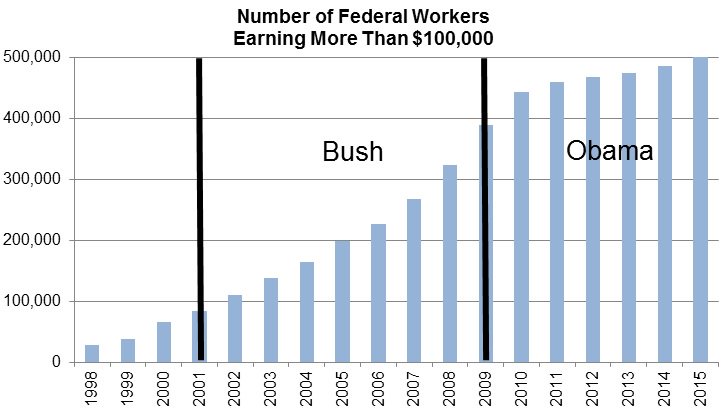
In competitive enterprises, rising salaries are generally an indication of increasing productivity, In anti-competitive organizations, however . . . .
Thursday, January 28, 2016
Deja Vu Corporate Debt
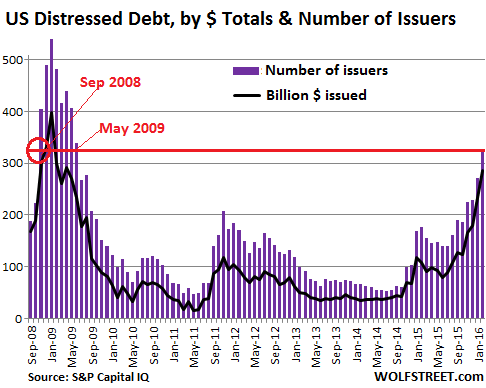
Distressed corporate debt (bonds whose yields are at least 10 points above Treasuries) have now reached the levels at the beginning of the 2008 financial crisis. This is the direct result of the Federal Reserve's near-zero interest rates which, predictably, encouraged blind risk taking. What does the Fed plan to do this time?
Subscribe to:
Posts (Atom)